Detect the surplus
A metering point at the grid connection reports, to the second, how much solar power is currently left over – the basis for every charging decision.
Wallbox · Photovoltaics · Storage
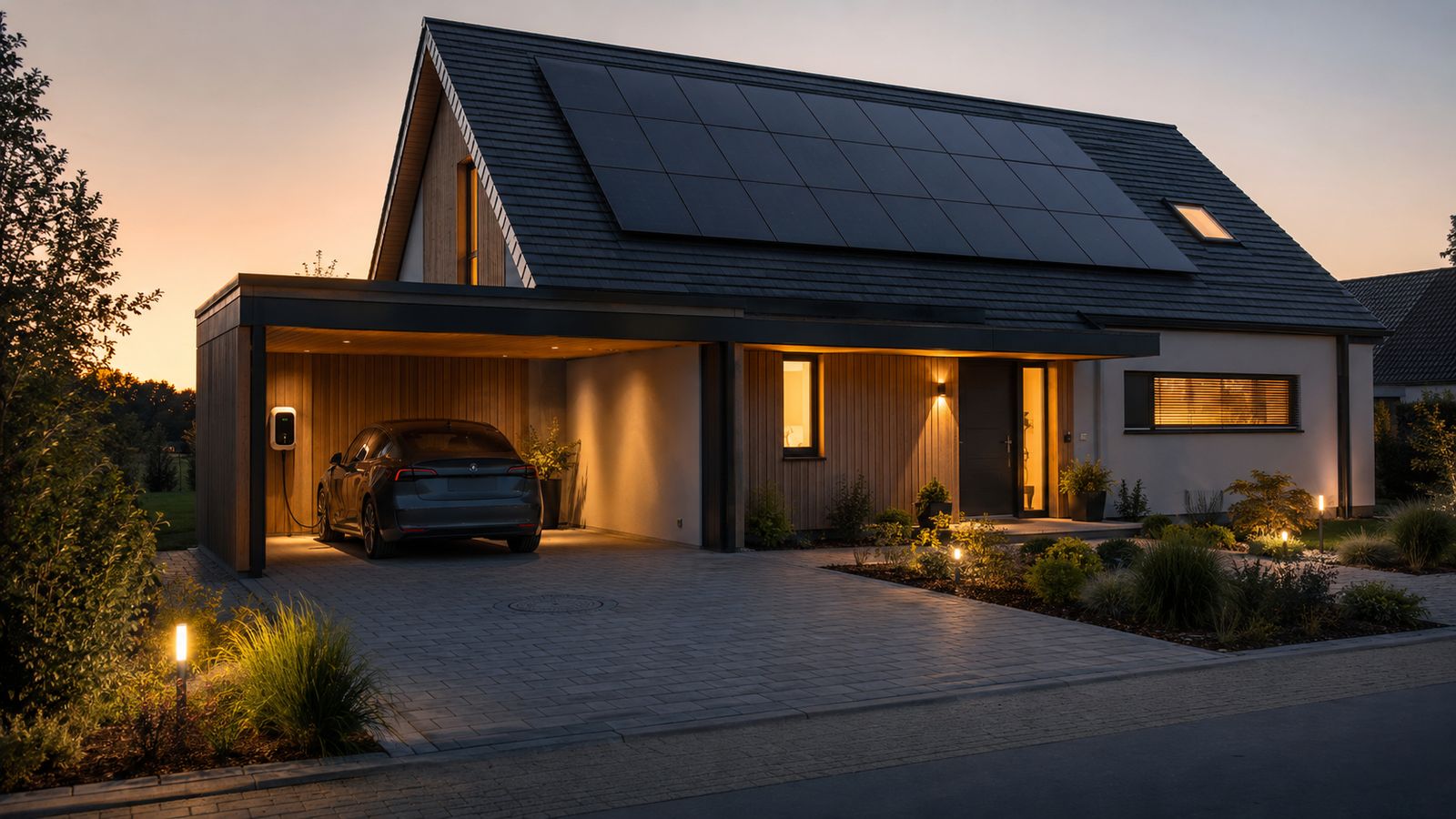
The cheapest and cleanest kilowatt-hour for your EV comes from your own roof. We'll show you how the wallbox, PV system and storage become a well-rehearsed trio.

The trio
Each component makes sense on its own – together they become unbeatable: the PV system generates the power, the storage holds it ready, and the wallbox brings it to the vehicle. An energy management system ensures that all three work together perfectly.
Smart charging
An intelligent wallbox preferentially charges your vehicle when your PV system generates more than the house and storage currently need. This way the surplus doesn't flow into the grid for a few cents, but into your battery on four wheels.
A metering point at the grid connection reports, to the second, how much solar power is currently left over – the basis for every charging decision.
The wallbox regulates its power dynamically: when a cloud rolls in it charges more slowly – when the sun shines it ramps up. Fully automatic.
A battery storage smooths out generation fluctuations and provides solar power in the evening too – ideal for anyone who is out and about during the day.
Important to know: pure surplus charging, grid-optimised charging or fast charging at the touch of a button – good systems leave the choice to you. You decide whether the sun or your calendar sets the pace today.
A typical day
A real-world example: a single-family home with a PV system, home storage and an intelligent wallbox.
The vehicle starts the day with the charge level from the previous evening. The rising sun is already beginning to supply the household and storage.
The system runs at full capacity. If the car is at home, the surplus flows directly into the vehicle battery – with dynamically regulated power.
The home storage continues to fill up in parallel. The energy management prioritises automatically: first the household, then the storage and vehicle according to your settings.
Those who only get home after work charge from the home storage filled during the day – or specifically in cheap grid-electricity windows. In the morning the car is ready.
Good to know: Wallboxes up to 12 kW must be registered with the grid operator; from 12 kW an approval is required. We handle the registration and coordinate everything with your grid operator.
For private charging points there are regularly funding programmes from federal, state and local governments. You can read about the options currently available under Funding: wallboxes.
Requirements
The good news: in most single- and two-family homes, solar charging is possible without major modifications. We check these points for you in advance:
We plan your home charging solution – from a single wallbox to a complete system with PV and storage. Get in touch with us.